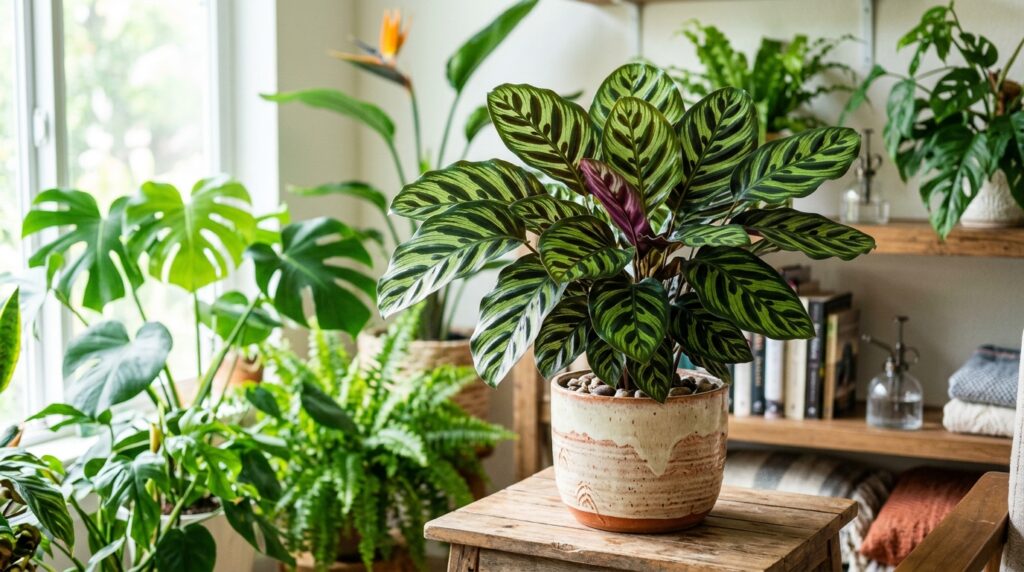
Your Calathea isn’t “fussy”… it’s misunderstood.
If your plant looks thin, leggy, or just sad with a few scattered leaves, you’re not alone. Most plant lovers think Calatheas naturally grow sparse—but that’s completely wrong. In the right conditions, they can become full, lush, and unbelievably bushy with vibrant patterns that steal attention instantly.
The secret? It’s not one trick—it’s a combination of small, powerful changes that completely transform your plant’s growth pattern. Once you understand how Calatheas grow, you can actually control how dense and full they become.
In this video, I’m going to show you 6 simple but powerful tricks that will turn your Calathea from thin and struggling into a full, bushy masterpiece. And the best part? These are beginner-friendly and easy to apply right away.
Let’s unlock the hidden potential of your Calathea 🌱
🌱 1. Give Bright Indirect Light (The Growth Trigger)
If your Calathea isn’t growing bushy, light is usually the #1 problem. These plants naturally grow under tropical canopies, which means they love bright but indirect light. Too little light slows growth dramatically, causing fewer leaves and long, stretched stems.
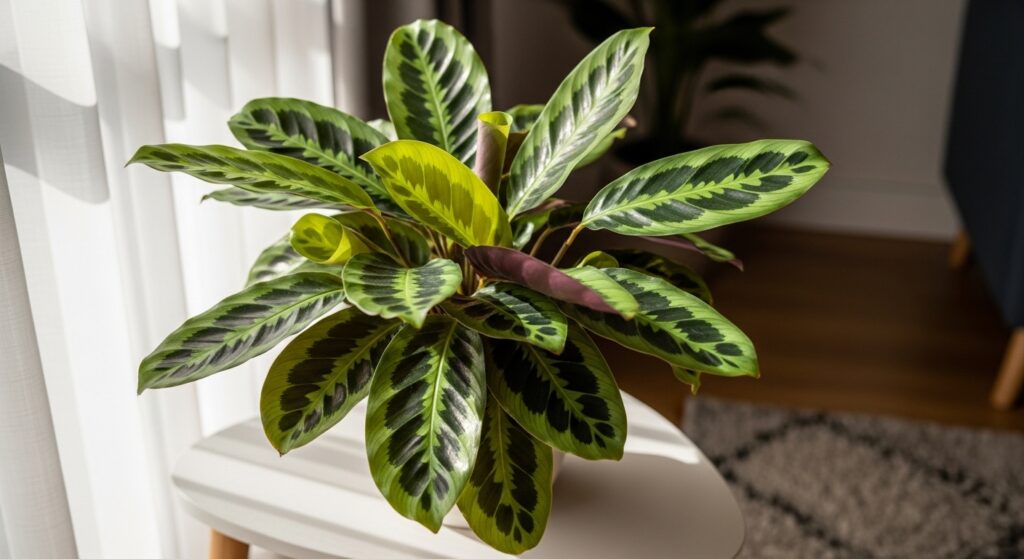
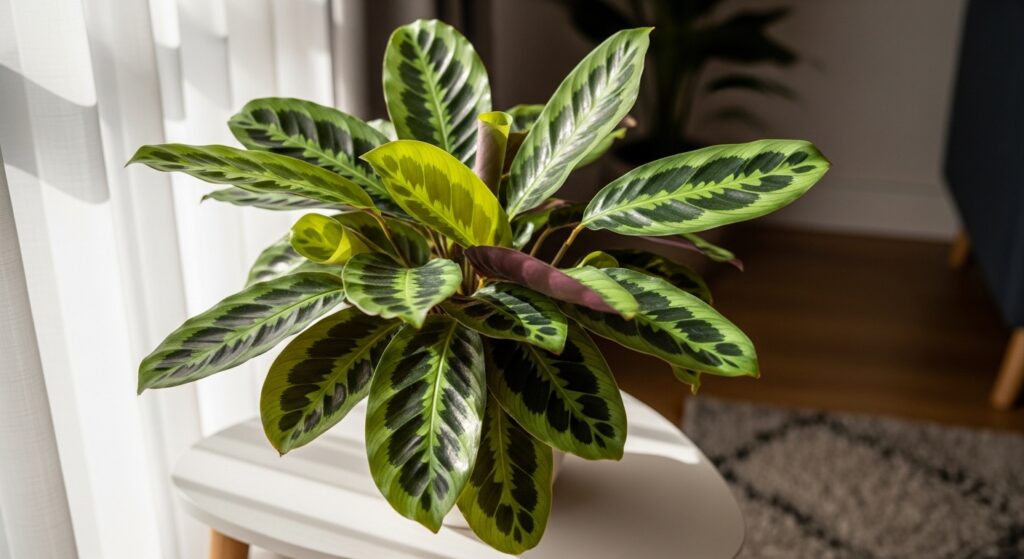
Place your Calathea near a bright window with filtered light—like behind sheer curtains. This encourages the plant to produce more leaves closer together, creating that full, compact look. If it’s sitting in a dark corner, it will survive—but it won’t thrive.
On the flip side, avoid direct sunlight hitting the leaves. Harsh sun can bleach or burn those beautiful patterns, leaving dry edges and faded colors.
A simple trick: if you can comfortably read a book without turning on lights, your Calathea will likely be happy there.
When light is just right, your plant starts pushing out new leaves faster—and more importantly, closer together. That’s the first step to achieving that lush, bushy appearance everyone loves.
💧 2. Master Consistent Watering (No More Stress Cycles)
Calatheas hate inconsistency. If you let the soil dry out too much and then suddenly overwater, the plant goes into stress mode. And when stressed, it stops producing new leaves—which means no bushiness.
The key is to keep the soil consistently moist, but never soggy. Think of it like a wrung-out sponge—slightly damp, not dripping. Water when the top inch of soil feels dry, and always use pots with drainage holes.
Another important factor is water quality. Calatheas are sensitive to chemicals found in tap water, like chlorine and fluoride. These can cause brown edges and slow growth. If possible, use filtered, distilled, or rainwater.
When your watering routine is stable, your Calathea feels “safe” and responds by producing more growth points. More growth points = more leaves = a fuller plant.
Consistency here is what transforms a struggling plant into a thriving one.
🌿 3. Increase Humidity (The Secret to Lush Leaves)
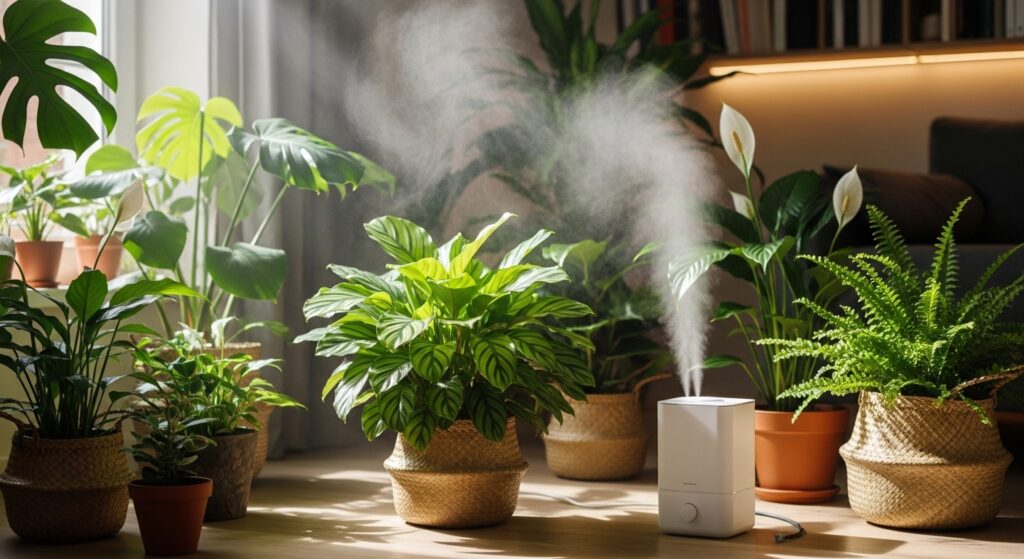
If there’s one thing Calatheas absolutely love, it’s humidity. These plants come from tropical rainforests where the air is constantly moist. In dry indoor environments, they struggle—and that’s when you see crispy edges and slow, sparse growth.
To make your Calathea bushier, aim for humidity levels above 60%. This encourages faster leaf production and healthier, wider foliage.
You can increase humidity in several easy ways:
- Place a humidifier nearby
- Group plants together to create a mini microclimate
- Use a pebble tray with water under the pot
Bathrooms and kitchens can also be great spots if they get enough light.
Higher humidity doesn’t just keep leaves pretty—it actually helps the plant grow more actively. When conditions feel like home, your Calathea will push out new leaves more frequently, filling in empty spaces and creating that dense, bushy look.
Think of humidity as the “fuel” for lush growth.
✂️ 4. Prune Strategically (Encourage New Growth)
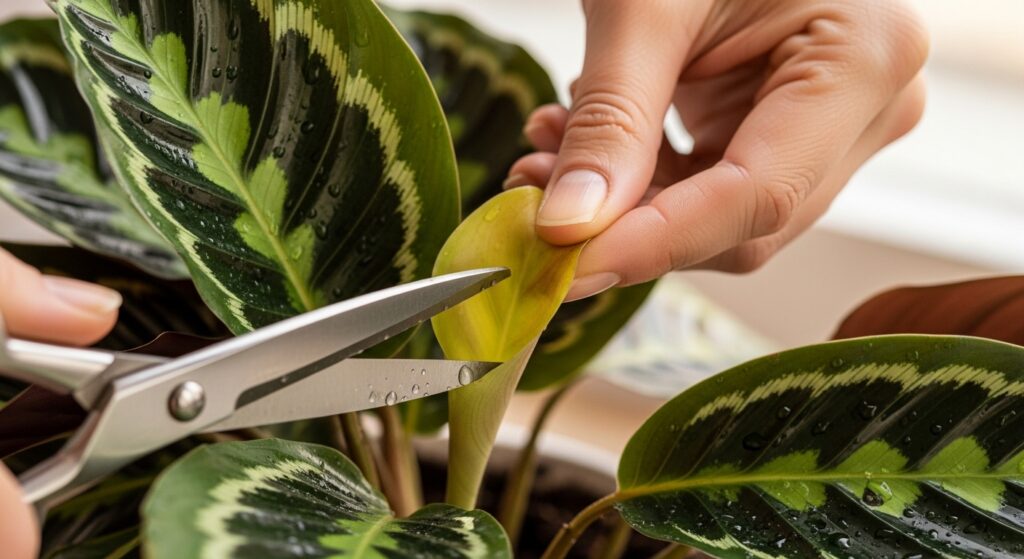
It might feel scary, but pruning is one of the most powerful ways to make your Calathea bushier. When you remove old, damaged, or leggy leaves, the plant redirects its energy into producing new growth.
Always use clean, sharp scissors and cut at the base of the stem near the soil. Focus on removing:
- Yellowing leaves
- Damaged or crispy edges
- Weak, stretched stems
This not only improves the plant’s appearance instantly but also stimulates fresh growth from the base.
Calatheas grow from underground rhizomes, which means pruning actually encourages multiple new shoots to emerge. More shoots = a fuller plant.
Don’t overdo it—never remove more than 20–30% of the plant at once. Think of pruning as guiding the plant, not shocking it.
With regular trimming, your Calathea will start growing denser instead of taller and sparse. It’s like giving your plant a fresh start.
🪴 5. Repot and Divide (Multiply Growth Points)
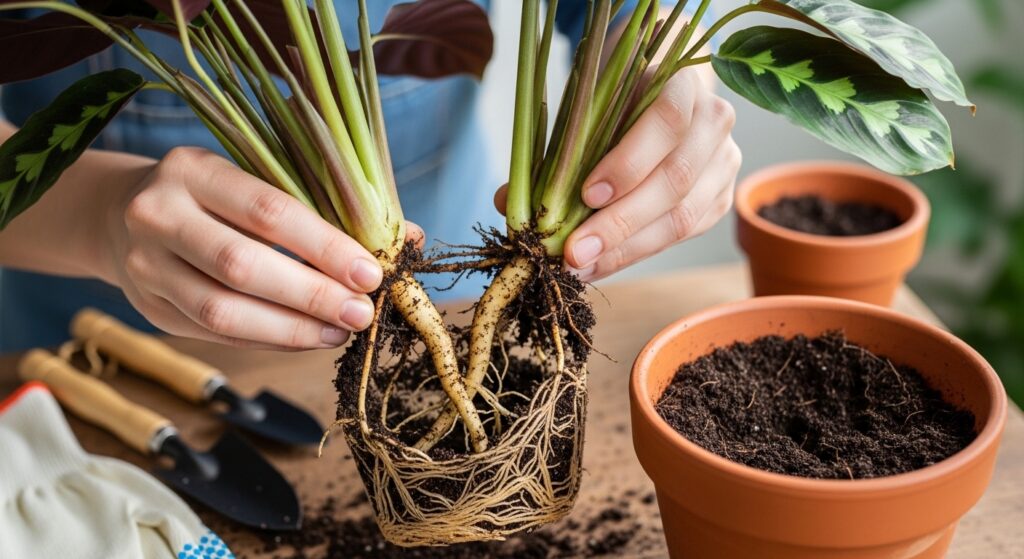
If your Calathea looks crowded or roots are circling the pot, it might be time to repot. But here’s the hidden trick—division.
When repotting, you can gently separate the plant into smaller sections, each with its own roots and leaves. Then, replant them together in one pot for a fuller look, or grow multiple plants.
Use a well-draining soil mix that still holds moisture—something like potting soil mixed with coco coir and perlite works perfectly.
Repotting gives roots more space to grow, which directly affects how many leaves the plant can support. More root space = more energy = more foliage.
When you combine multiple divisions into one pot, you instantly create a bushier plant appearance—even before new growth starts.
It’s one of the fastest ways to transform a thin Calathea into a full, lush centerpiece.
🌟 6. Feed Lightly but Regularly (Boost Leaf Production)
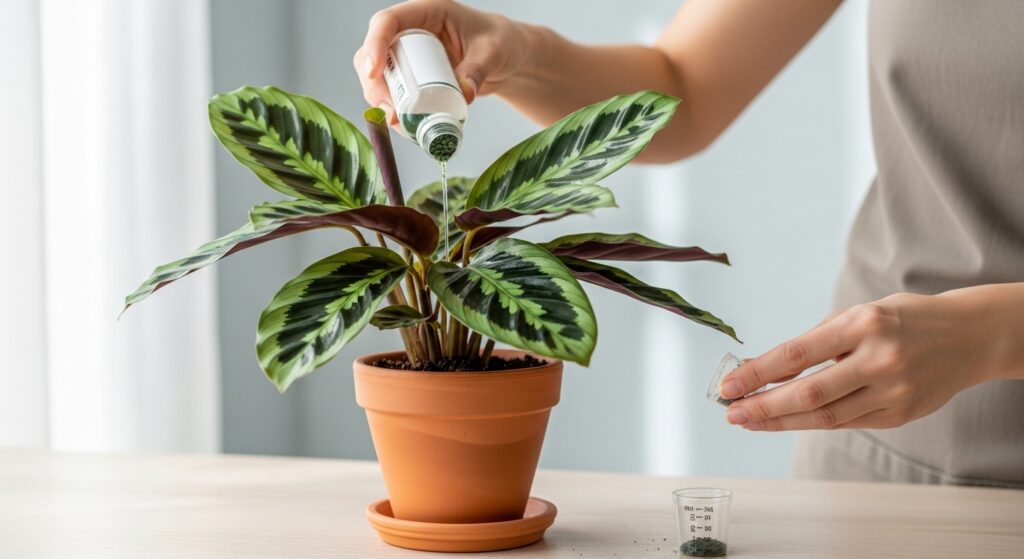
To grow bushy, your Calathea needs nutrients—but not too much. Over-fertilizing can actually harm the plant and cause leaf burn.
Use a balanced liquid fertilizer diluted to half strength, about once a month during the growing season (spring and summer). This provides just enough nutrients to support steady leaf production.
Look for fertilizers with equal ratios like 10-10-10 or 20-20-20. These support overall plant health, especially leaf growth.
In fall and winter, reduce or stop feeding since growth naturally slows down.
Fertilizing works like a gentle boost—it won’t force growth overnight, but over time, it helps your Calathea produce more leaves and maintain vibrant colors.
When combined with proper light, watering, and humidity, feeding completes the formula for a dense, bushy plant.
🌿Tips
Now you know the real secret—bushy Calatheas don’t happen by luck, they happen by design.
Apply these 6 simple tricks, and your plant will reward you with lush, vibrant growth that completely transforms your space.
If you found this helpful, don’t forget to like, subscribe, and share with a fellow plant lover 🌱