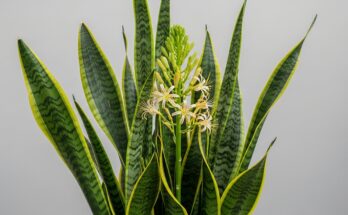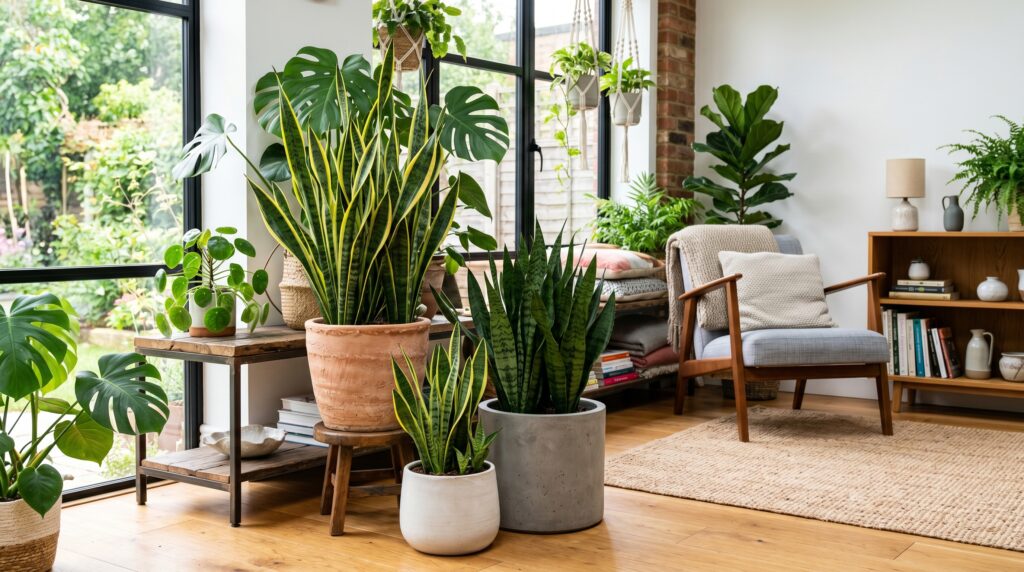
What if I told you… you could turn ONE snake plant into TEN… without spending a single dollar? 😱
And the craziest part? Most people are doing it completely wrong—losing months of growth without even realizing it.
If your snake plant is just sitting there… not multiplying… not growing new babies… you’re missing out on one of the easiest plant hacks out there. This plant is basically a cloning machine—but only if you know the secret methods.
In today’s video, I’m going to show you exactly how to multiply your snake plant FAST—not the slow, frustrating way most beginners try. We’re talking about methods that can give you full, healthy plants in weeks instead of months.
And here’s the best part:
You don’t need expensive tools.
You don’t need special skills.
And you definitely don’t need to be a plant expert.
I’ll break down 3 powerful propagation methods, ranked from fastest to slowest—so you can choose what works best for you. Plus, I’ll share some hidden mistakes that can completely ruin your results… even if everything else seems right.
So if you want more plants, fuller pots, or even start your own little plant business from home…
You’re going to want to watch this all the way through.
Because by the end of this video…
You’ll never look at your snake plant the same way again.
Let’s get started.
🌱 SECTION 1: DIVISION METHOD (FASTEST)
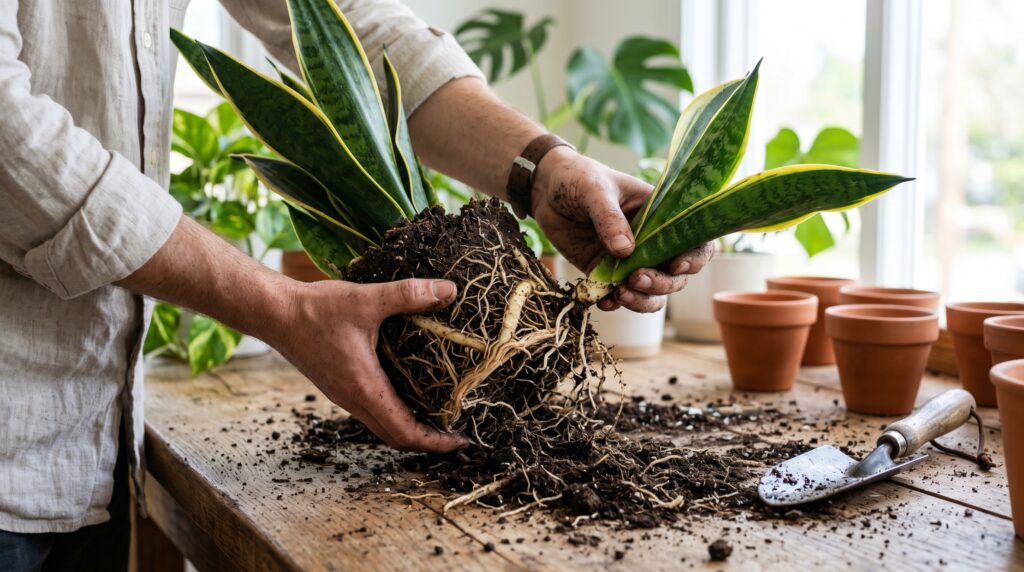
If you want results FAST, this is the method you should use—no debate.
Division is basically taking one mature snake plant and splitting it into multiple plants instantly. No waiting for roots. No guessing. Just immediate results.
Start by gently removing your plant from its pot. Don’t rush this part—tilt the pot, tap the sides, and carefully pull the plant out without damaging the roots. Once it’s out, you’ll notice thick root clusters. These are connected by underground stems called rhizomes.
Now here’s the magic:
Each of those clusters can become a brand-new plant.
Use your hands to gently separate them. If they’re too tight, you can use a clean knife—but try to keep as many roots intact as possible. Each section should have both roots and leaves. That’s the key to instant growth.
Once separated, plant each section into its own pot using well-draining soil. Don’t bury it too deep—just enough to support the plant.
Water lightly after repotting, and place them in bright, indirect light.
Here’s why this method is powerful:
You’re not starting from zero. These are already mature plants, so they continue growing almost immediately.
Within a few weeks, you’ll start seeing new shoots. No long waiting period. No uncertainty.
If your goal is to quickly fill your home with more plants—or even sell them—this is hands down the best method.
But what if you want even MORE plants from just a single leaf?
That’s where the next method comes in.
✂️ SECTION 2: LEAF CUTTINGS METHOD
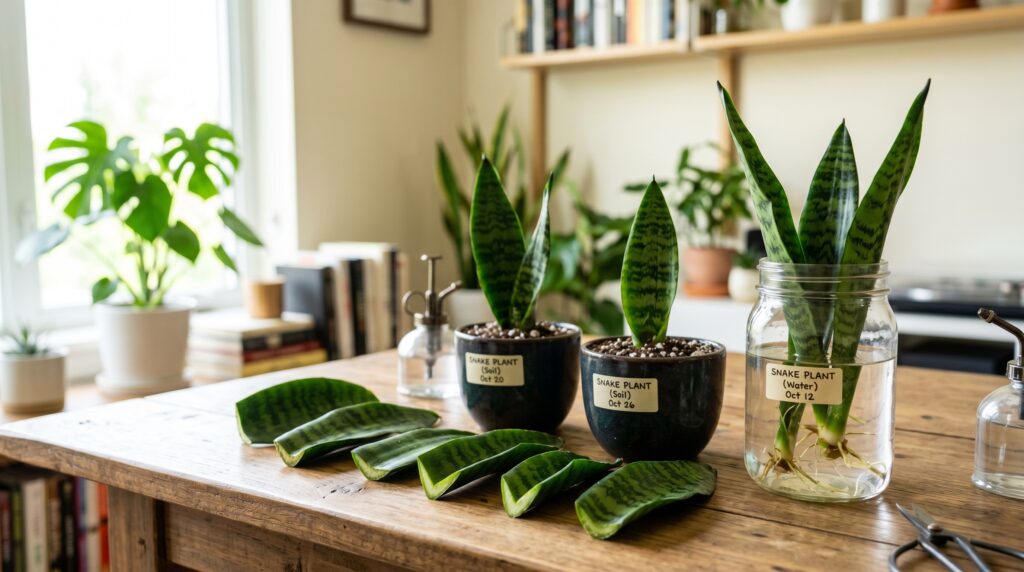
This is where things get really interesting.
With just ONE leaf, you can create multiple new plants. Sounds crazy, right? But it works—if you do it correctly.
Start by choosing a healthy, mature leaf. Avoid damaged or weak ones. Then cut it near the base using clean scissors or a knife.
Now, cut that leaf into smaller sections—about 3 to 4 inches each.
Here’s the part most people mess up:
You MUST remember which end is the bottom.
If you plant it upside down… it won’t grow. At all.
A simple trick? Cut a small “V” shape at the bottom so you never forget.
Now you have two options: water or soil.
For water propagation, place the bottom end of each cutting into a glass of water. Keep it in bright, indirect light and change the water every few days. Roots usually start forming in 2 to 6 weeks.
For soil propagation, let the cuttings dry for 1–2 days first. This prevents rot. Then place them directly into well-draining soil and water lightly.
This method takes longer—but here’s the payoff:
One leaf can turn into MANY plants.
Over time, small pups will grow from the base, eventually becoming full plants.
It’s slower than division—but perfect if you want to multiply your collection massively.
But there’s still one underrated trick most people don’t even know about…
🌿 SECTION 3: RHIZOME CUTTINGS (HIDDEN METHOD)
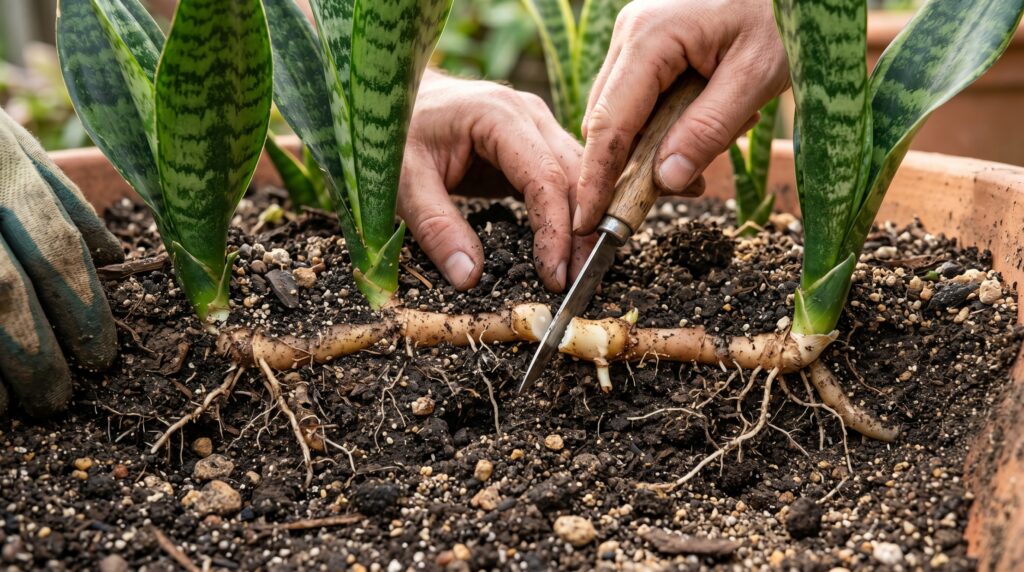
This is the secret method that many beginners completely overlook—but it can speed things up big time.
Snake plants grow using underground stems called rhizomes. These are thick, horizontal roots that spread beneath the soil and produce new shoots.
Instead of waiting for leaves to grow roots…
You can use the plant’s natural growth system to your advantage.
Carefully dig around the base of your plant until you spot a rhizome. It usually looks like a thick, pale root connecting different shoots.
Using a clean knife, cut a section of that rhizome—make sure it has at least a small root attached.
Now replant that piece into fresh soil, just below the surface.
Water lightly and place it in a warm, bright spot.
Here’s why this works so well:
Rhizomes are already programmed to grow new plants. You’re skipping the slow rooting phase completely.
Within a few weeks, you may start seeing new shoots emerging from the soil.
It’s faster than leaf cuttings… but not quite as instant as full division.
Still, it’s a powerful method if you want to multiply plants without cutting up leaves or fully dividing the plant.
And when you combine all three methods together…
That’s when things really take off.
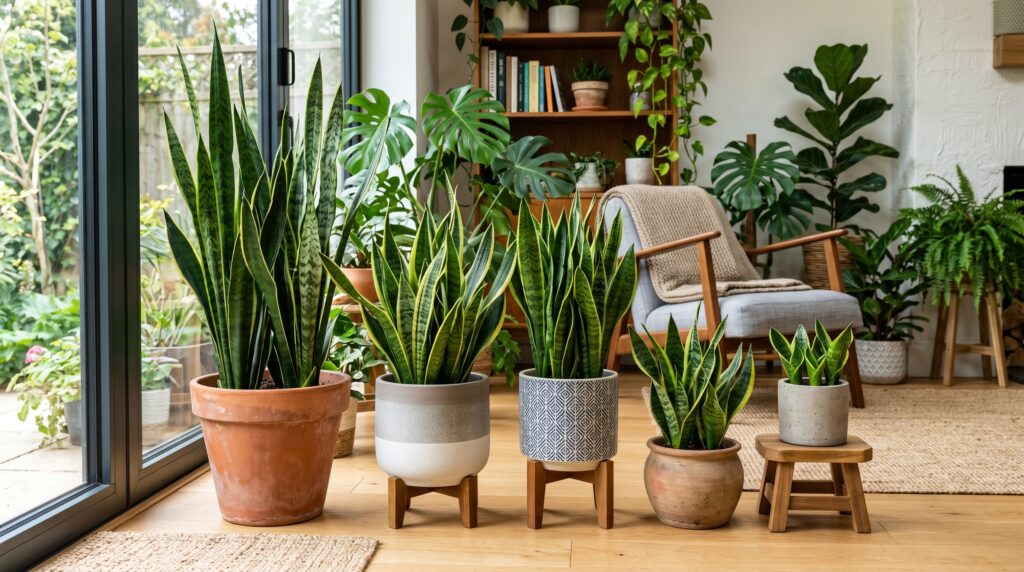
Now you know the three most powerful ways to multiply your snake plant—and the truth is, most people only use ONE of these methods… if any at all.
But here’s the smart move:
Don’t just pick one—combine them.
Use division for instant results.
Use leaf cuttings to create multiple future plants.
And use rhizomes to speed up hidden growth underground.
That’s how you turn one plant into a whole collection.
Just imagine this:
A few months from now, your space filled with lush, thriving plants—all grown by you. Or even better… turning this into a small side hustle by selling them.
And the best part? You didn’t need expensive tools or years of experience.
If you found this helpful, make sure to hit that like button and subscribe—because I’ve got more plant hacks coming that most people never talk about.
And before you go, I want to hear from you:
Which method are you going to try first—division, leaf cuttings, or rhizomes?
Drop your answer in the comments below 👇
Thanks for watching… and I’ll see you in the next video. 🌿