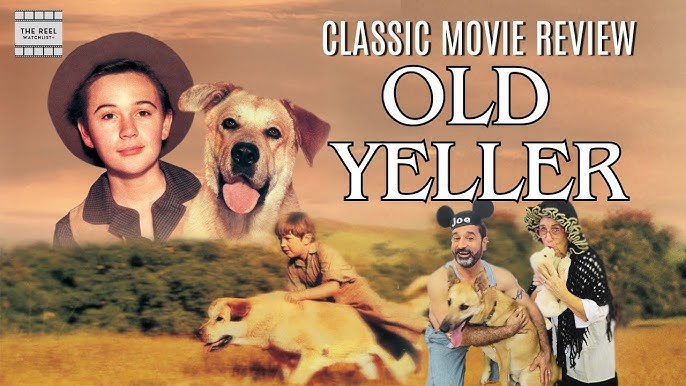
Here is the heartbreaking ending of Old Yeller, told in a way that captures the emotional weight of the story (spoilers ahead, of course).
After the long, hot summer in 1860s Texas, Old Yeller — the big, ugly, yellow stray dog who had become the heart of the Coates family — proves his loyalty over and over. He fights off a bear to protect little Arliss. He saves Travis from an angry bull. And in the story’s most intense moment, he battles a rabid wolf that attacks the family, taking a bite in the process to keep Mama and the children safe.
The next day, the signs appear.
Old Yeller starts acting strange — hiding under the cabin, growling low in his throat, eyes strange and glassy. Travis watches in growing horror as the dog he loves begins to show the unmistakable symptoms of rabies: the same sickness that killed the cow and calf earlier in the story.
Travis’s father comes home and confirms it. There is no cure. Once an animal shows symptoms, it’s only a matter of time before the madness takes over completely — and then the danger turns toward the people he loves most.
Travis’s father says the kindest thing, the only thing left to do, is to shoot him before he suffers more and before he becomes dangerous.
Travis can’t accept it. He begs. He says maybe Old Yeller will get better. He says he’ll keep him chained up forever if he has to.
But his father looks at him with quiet sadness and says:
“He’s already suffering, son. And it’s only going to get worse. You don’t want him turning on Arliss or your mama, do you?”
Travis knows his father is right. He just can’t bear to be the one to do it.
His father offers to shoot Old Yeller himself. But Travis shakes his head. He says no — if it has to be done, he has to be the one. Because Old Yeller belongs to him.
The next morning is gray and still. Travis takes the rifle. Old Yeller follows him slowly, weakly, trusting him completely, tail giving a small wag even though he can barely walk straight.
They go up the hill away from the cabin. Travis stops at the spot where the grass is tall. He turns around.
Old Yeller sits down and looks up at him — the same way he always did when he was waiting for Travis to throw a stick or tell him he was a good dog.
Travis raises the rifle. His hands shake so badly he can hardly hold it steady.
He lowers it again. He can’t do it.
He turns away, crying, telling Old Yeller to go home. But Old Yeller just sits there, watching him, waiting.
Travis walks a few steps, then stops. He knows he can’t leave him like this — sick, suffering, and confused.
He turns back. He raises the rifle one last time.
And he shoots.
The sound cracks across the hill.
Travis drops the rifle and falls to his knees beside the still body. He puts his arms around Old Yeller’s neck and cries until he can’t cry anymore.
Later, Travis buries him under a big oak tree on the hill.
Days pass in a dull blur. Travis can’t talk about it. He can’t look at the hill.
Then one morning, a little stray pup — one of Old Yeller’s puppies, the one they called Young Yeller — comes bounding up the hill toward Travis, all floppy ears and clumsy feet.
Travis watches the pup trip over his own paws, then scramble back up and keep coming, tail wagging like crazy.
Something inside Travis breaks open again — but this time it’s different.
He reaches down and picks up the pup. The little dog licks his face, wiggles with joy, and yips.
Travis holds him close and looks out over the valley.
The last lines of the book are quiet and devastating in their simplicity:
“He got up and walked away toward the house. Young Yeller trotted after him. And somehow that seemed to be the right thing to do.”
It’s not a happy ending. It’s not even close. But it’s an ending that says life keeps moving forward — even when your heart is still lying under that oak tree on the hill.
Would you like to hear another heartbreaking dog story, or do you want to stay with this one for a bit?