So this isn’t peace.
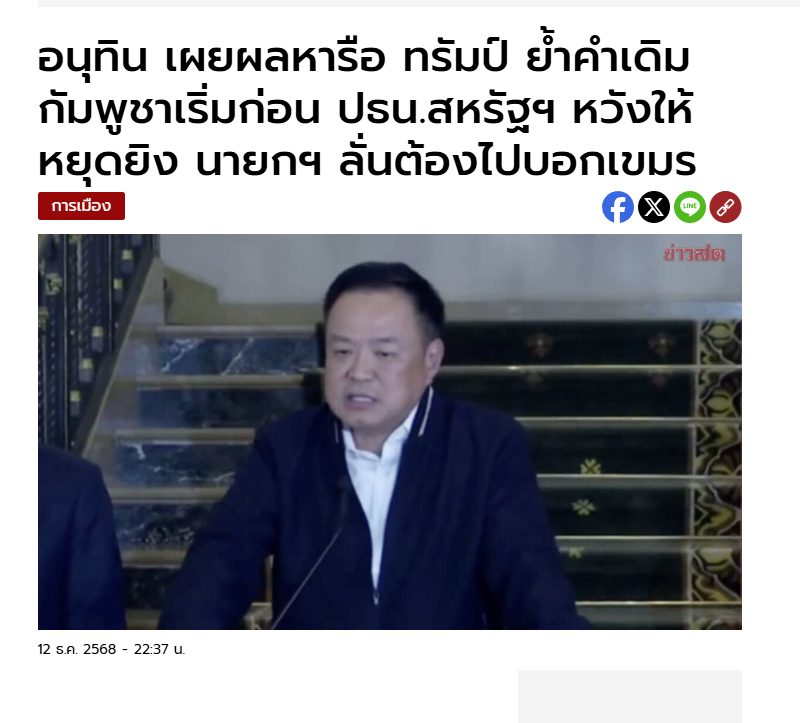
The language does all the useful political work without doing any real world work: no yes, no no, no timeline, no pause. “If someone asks, tell the other side first, then we’ll see” turns a ceasefire into an administrative loop, not a decision. Pressure is converted into procedure, and a moment that required clarity is made safely abstract.
That phrasing only appears when a real ask has already been made and deferred. It avoids saying no, hides where authority actually sits, and keeps military options untouched. What’s being managed here isn’t the battlefield, but alignment: how to acknowledge external concern without yielding to it, how to appear cooperative without committing, how to keep every outcome reversible.
The insistence that Cambodia must act first does more than shift blame outward. It disciplines the situation inward. By setting maximal preconditions publicly, any future pause can be framed as compliance by the other side, not reconsideration by Thailand. That protects domestic power centres, boxes in internal dissent, and preserves the sovereignty narrative regardless of what happens next.
This is why the statement came fast. Silence after the call would invite speculation about pressure or imbalance. Speaking first fixes the record. It reassures institutions, voters, and allies that nothing is locked in, nothing conceded, nothing paused. Explanations fill the space where decisions would normally sit.
So this buys time during an election window, manages scrutiny before it hardens, and pre writes the defense for later: talks were ongoing, processes were followed, no agreement was reached yet. It sounds responsible, looks cooperative, and changes absolutely nothing on the ground, which, in moments like this, is the point.
Midnight