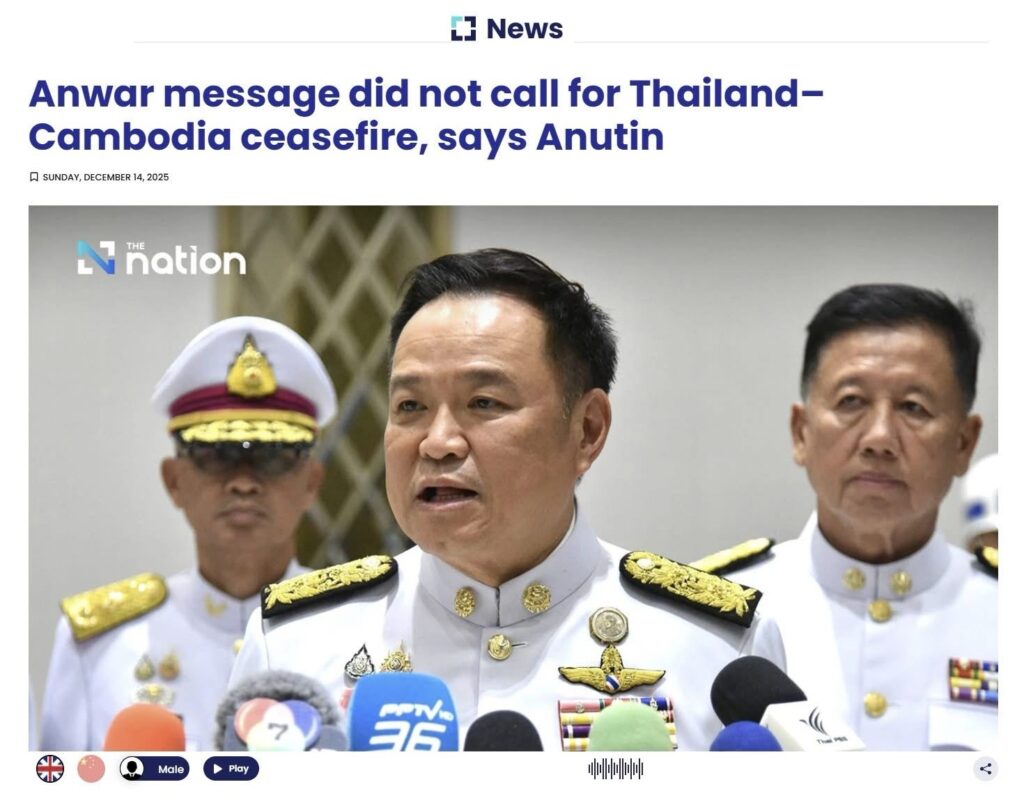
What began as a land-border confrontation is now touching coastal provinces and adjacent economic corridors. Once that happens, international systems stop reading events as isolated incidents and start assessing broader risk, not because intentions changed, but because geography did.
In diplomacy, this is normally where graduated restraint language appears. Phrases like “cease provocations” exist for a reason. They are designed to lower temperature without forcing formal agreement, legal admission, or loss of face. They are a bridge, not an endpoint.
When even that informal restraint language becomes contested, it signals something important: the absence of a shared de-escalation process. At that point, attention shifts away from words and toward what is missing, mechanisms, verification, and mutually legible procedures.
This matters more as geography expands. Coastal exposure, trade routes, tourism gateways, and maritime proximity reduce tolerance for ambiguity. Markets, insurers, airlines, diplomats, and regional actors react not to declarations, but to uncertainty. When processes are unclear, external pressure tends to replace dialogue.
That is how conflicts internationalize quietly. Not through dramatic escalation, but through gaps in restraint and verification as risk widens beyond the immediate border.
Once a situation reaches that stage, phrasing becomes secondary. What determines trajectory is whether there is a credible way to slow momentum, before escalation management is taken out of the hands of the parties themselves.
Midnight
Source: https://www.nationthailand.com/news/general/40059766?fbclid=IwY2xjawOrcaRleHRuA2FlbQIxMABicmlkETFZWElLaEp2cU9MQXRQTXZKc3J0YwZhcHBfaWQQMjIyMDM5MTc4ODIwMDg5MgABHijrXjavw7t9E2M_zJ_2qwX44CXEJQ8AGeppd_1swW-oBpMg8izYq0Muuym0_aem_QLy54_KFokdiD_znNBGPsw&brid=gmDJapRrX7355PZFzgANTQ